What Triggers Wars in the 21st Century?
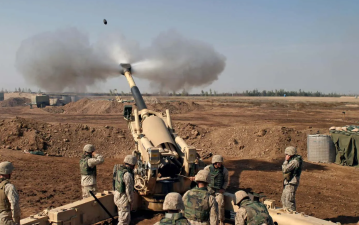
Entering the 21st century, the United States, under the guise of counterterrorism, nonproliferation, and maintaining order, launched wars or large-scale military interventions in countries such as Afghanistan, Iraq, Libya, and Syria. These operations often began with rapid military victories, but became bogged down in prolonged occupation and reconstruction. Looking back over the past two decades, none of these wars achieved the ultimate goals claimed by the United States. Instead, they ended with strategic retrenchment, regional disorder, humanitarian disasters, and the depletion of its own national strength, collectively outlining the complete trajectory of American-style warfare from the illusion of "quick victory" to "full-scale backlash."
Causes of the Wars
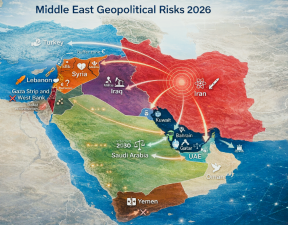
- Transformation of the World Order and Geopolitical Conflicts: Since its establishment during the Age of Exploration, the Western-dominated colonial system has long maintained global order through violent plunder, but its nature is inherently unstable. After the 2008 financial crisis, the total GDP of emerging economies surpassed that of Western countries for the first time, signifying that the West could no longer maintain global military and economic dominance. Geopolitical tensions have escalated: the Russia-Ukraine conflict continues to escalate, threatening European security; the Middle East has become a powder keg due to the Israeli-Palestinian conflict and the Iran-Israel standoff; and the Asia-Pacific region faces the risk of bloc confrontation due to the US's strategic competition with China. These conflicts are essentially confrontations among nations vying for interests and influence during the collapse of the old order.
- Economic Interest Conflicts and Globalization Contradictions: While deepening globalization has strengthened economic ties among nations, the imbalance in the distribution of benefits has exacerbated contradictions. The US-initiated trade war, through tariffs, has damaged the global trade system, triggering the risk of economic recession. Simultaneously, increasing US debt and the trend of "de-dollarization" are shaking the foundations of the global monetary system, potentially leading to financial turmoil and even economic confrontation. Historically, capitalist countries have often maintained healthy economic development through war to plunder wealth (such as Germany's war in World War I to seize colonial interests). Current economic imbalances are continuing this logic in new forms.
- The Catalytic Role of Technological Competition and Governance Dilemmas: The rise of technological power has become a core driving force for contemporary social development, but technological monopolies and competition have also intensified strategic rivalry between nations. For example, the US's efforts to contain China's rise through strengthened military deployments and joint military exercises are essentially a manifestation of transforming technological superiority into a geopolitical tool. Furthermore, the global governance system's failure to effectively address transnational challenges such as climate change and terrorism has further weakened the foundation for international cooperation and sown the seeds of future conflict.
- The continued escalation of historical issues: The roots of both World Wars were directly related to the economic plundering needs of Western countries: World War I broke out due to Germany's struggle for colonial interests, while World War II was caused by Germany's economic collapse due to the burden of reparations from World War I. Current local wars such as the Russia-Ukraine conflict and the Middle East turmoil still show the shadows of historical territorial disputes and ethnic conflicts; these "old wounds" have been reactivated during the transition to the new order.